Wake Surfing: Wave Time Changes Everything
Updated: Jun 11
Why wake surfing is gaining popularity among surf camp crowds
If you want to improve at surfing, there's really only one metric that matters more than any other: Wave Time. Not time in the water. Not time paddling. Not knowledge of the tides. The actual amount of time you spend riding the wave.
I got stoked on this concept recently in Nicaragua when one of my friends was breaking down the metrics her Garmin watch was collecting as she surfed over the week. 3 seconds here. 8 seconds there. And her personal best, a 12 second ride into the beach. As she mused about her surf progress, it made me stop to think about how little actual wave time people get at surf camps.
Ocean surfing, for all its beauty and magic, is remarkably inefficient as a skill-building activity. A typical surf session at a decent beach break might look something like this: paddle out (5-10 min), wait for a set (5-20 min), catch a wave (5-15 seconds), wipe out or kick off, repeat. On a generous day, an expert surfer might accumulate 5 to 8 min of actual wave time in a session.
Now picture this… You’ve dropped some big bucks to fly to a surf camp in Central America, Hawaii or further. You’ve spent hours researching the right place and vibe for you. Then for all that money, time, and effort you get a cumulative 1-2 minutes of wave time. Then it’s back home for months before you get back on a wave. It’s no wonder most intermediate surfers experience a challenging plateau in progression.
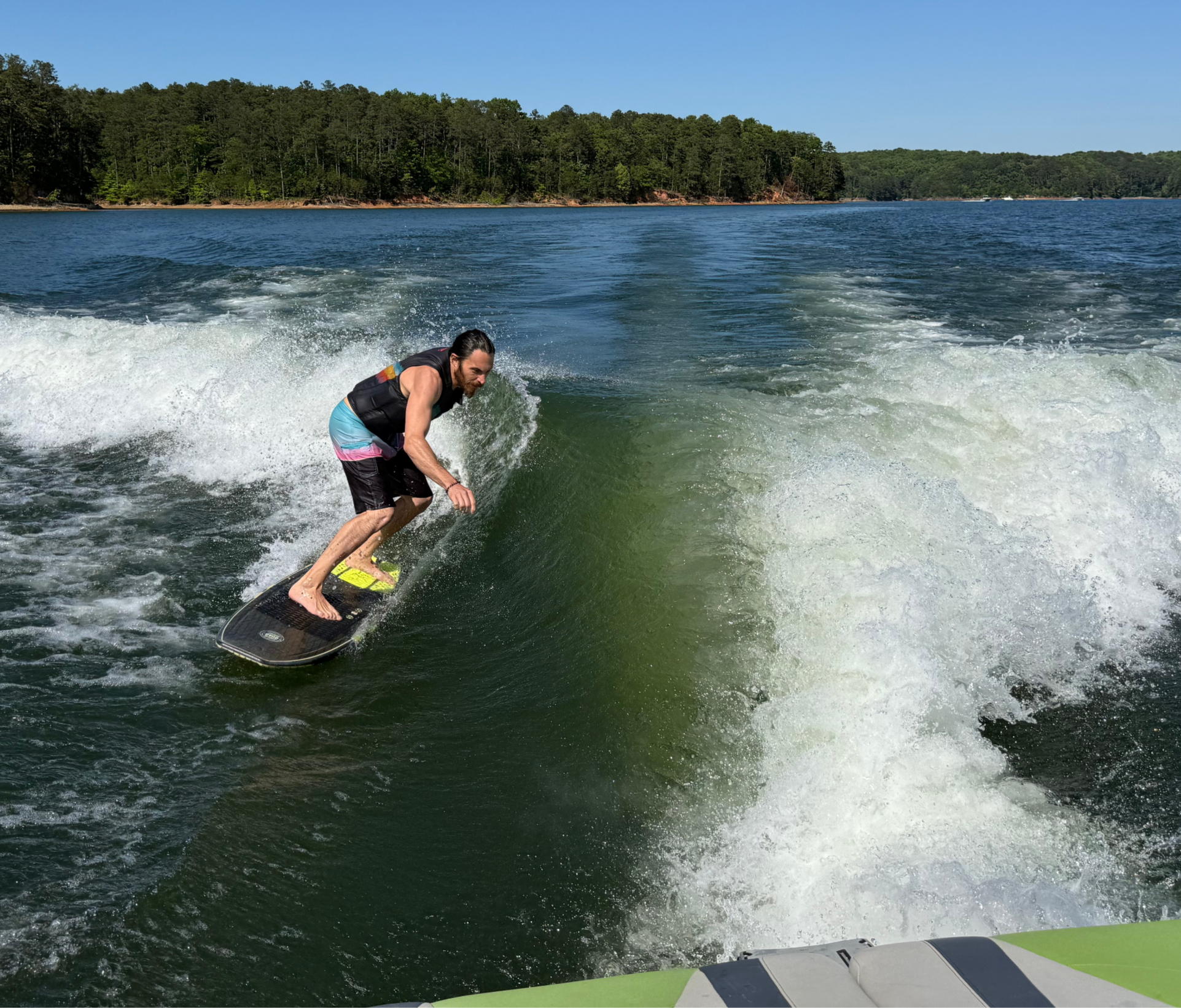
Wake surfing operates on an entirely different economy. Once you're up and riding behind the boat, you can stay on the wave for as long as your legs hold out. This is often 1-4 minutes. In a single hour of wake surfing, it's realistic to accumulate 20 to 40min of ride time. In just one hour of wake surfing you’ll get more wave time than several trips to an international surf camp.
For skill development, this matters enormously. Muscle memory is built through repetition. The body learns to feel a wave — where the power is, how to stay in the pocket, how to pump and generate speed — through accumulated experience, not theory. Wake surfing compresses that experience.
Beginner surfers in the ocean often spend most of their time frustrated, getting worked by the ocean. Wake surfing allows for earlier success and longer rides, which builds confidence and skills much faster. That confidence, when brought back to the ocean, changes everything about how a surfer rides and commits to waves.

This is why we created the Balance & Equanimity Weekend at Camp No Distractions.
Wake surfing and yoga on Lake Allatoona — because the mat and the board are teaching the same thing.
Come find out for yourself.
August 20–23, 2026.


Comments